
Identification
What a bird’s bill can tell you
Use bill proportions without treating diet as a species verdict.
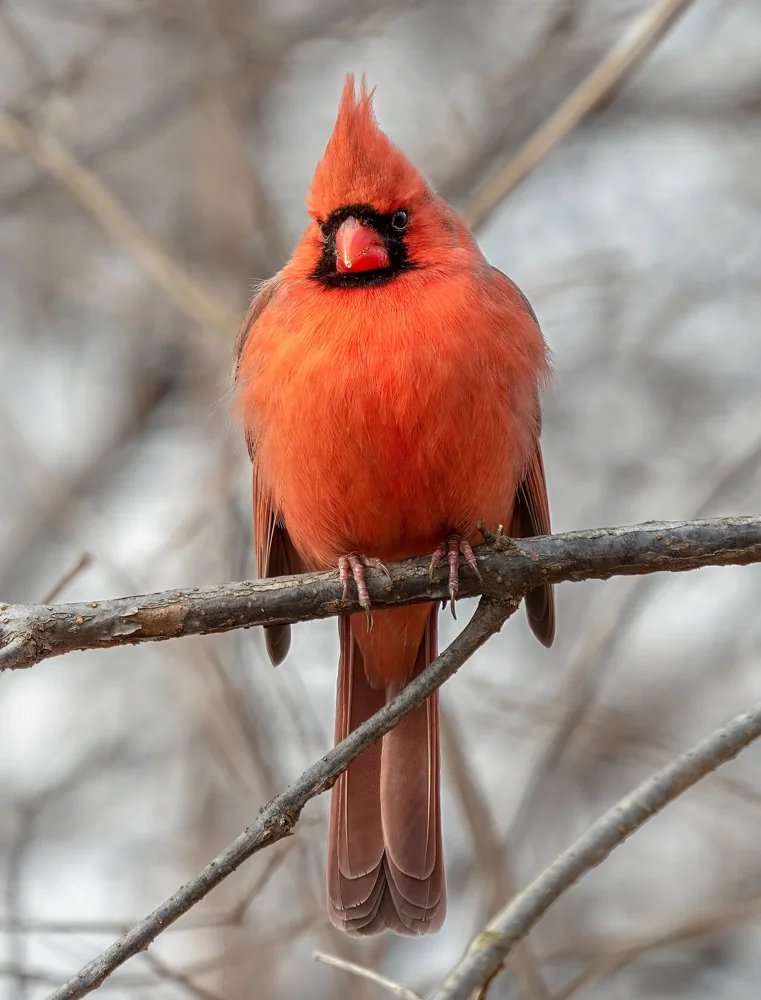
The bill sits at the front of a bird, but it can be the last part a beginner describes. Bright feathers and sudden movement draw attention first. A brief look at the bill can make the rest of the encounter easier to organize. Its outline helps distinguish a heavy-billed seed handler from a fine-billed bird, even when both appear as small brown shapes among branches.
Use the bill to form a question about the bird. A deep cone suggests one set of candidates; a narrow pointed profile suggests another. Several unrelated birds can share an outline, and a bird may eat foods beyond what its bill initially suggests. Keep the observed shape separate from assumptions about a complete diet or a species name.
Describe three dimensions in ordinary language
Start with length relative to the head. Then consider depth from top to bottom, especially near the base. Finally describe the tip and any obvious curve. “Short, deep and triangular from the side” communicates a different structure from “longer, narrow and straight.” These relationships remain more useful than guessing an exact measurement from a distant perch.
A side view usually reveals length and curvature best. A view from above or directly in front can show width while hiding projection. A bird looking toward you may seem to have almost no bill at all. Wait for a turn if the bird remains comfortably visible, and record the angle when it affects your description.
A cone can narrow the search
Northern Cardinals, House Finches and several sparrows show bills that look broadly conical. Their proportions differ, but the shared impression can direct you toward relevant guide pages. After that first grouping, compare face patterns, body proportions and the placement of colors. A conical bill alone cannot separate the many small birds that use similar tools to handle food.
A cardinal offers a conspicuous neighborhood example because the bill remains substantial on both sexes. A brown female can retain that structural clue even when she looks unlike a bright red male illustration. In an appropriate region, combine the bill with crest, tail and overall pattern. Other crested, heavy-billed birds still need consideration where they occur.
House Finch and House Sparrow demonstrate the next level. Both have short bills and can occupy the same settled places. To distinguish brown individuals, you need additional observations of the face and underparts. The bill has helped you reach a manageable comparison, but the comparison itself requires marks that the two birds do not share.
A narrow bill needs context too
White-breasted Nuthatch has a comparatively narrow, pointed bill on a compact body. Its profile differs from a finch’s deep cone. Watch the bill in relation to the head, then observe how the bird moves along a trunk. Structure and movement together give you a better starting point than calling every fine-billed bird an insect eater and stopping there.
Other birds also have fine bills. Some pick food from surfaces, others catch it in flight, and individual species may change feeding habits with season and opportunity. Describe a visible action such as probing bark or picking at a leaf. A single swallowed item rarely supports a full dietary conclusion, especially when the item was too small to identify.
Compare proportions within the bird
Relative length is especially valuable when overall size is difficult to judge. Downy and Hairy Woodpeckers resemble one another in plumage, but differ noticeably in bill projection relative to the head. That comparison works with a useful profile and supporting marks. An enlarged image of one bird should not be compared with a small image of the other as though display size were biological size.
Before reviewing photographs, match the viewing angle. A side-facing reference is the fairer comparison for a side-facing observation. Look at several labeled individuals rather than one dramatic portrait. Feather position around the base, lighting and perspective can change the apparent boundary between bill and head, so treat a marginal difference cautiously.
Color belongs in a separate line
Bill color can provide useful information, but it answers a different question from shape. A dark-looking bill in shadow may be difficult to compare with a bright illustration. Some species also show age or seasonal differences. Record the outline first, then state the color you could actually see and any conditions that make it uncertain.
Young Northern Cardinals initially have dark bills, while familiar adults have a conspicuously brighter bill. That variation explains why a less colorful individual can still fit the broader structure of the species. It does not make every dark-billed crested bird a young cardinal. Check the rest of the bird and the regional alternatives before assigning either age or identity.
Watch handling without inventing a purpose
A bird may carry a seed away, strike an object against a branch, or open and close the bill while calling. The same structure serves many activities beyond eating. Follow the visible sequence and keep the action attached to the correct individual. If the bird disappears behind foliage, leave the result of its handling unknown.
A useful private note could say that a small bird held a seed sideways in a deep bill, then flew into shrubs. Calling it a seed specialist adds a broader interpretation. For a beginner’s identification task, the visible bill and action already contribute enough. A species account can later supply dietary context from observations much broader than your single encounter.
Practice with two familiar profiles
Choose two locally common birds with clearly different bills and study existing guide photographs before a walk. Notice the relationship between length and depth on each. Outside, try to recover those proportions on a relaxed bird without consulting your screen immediately. Make a simple outline if that helps you remember the profile.
Finish the note with the feature you could not judge. You may have seen the cone clearly but missed its exact color, or seen a long projection without a good view of curvature. Those distinctions keep a useful observation intact. Over repeated encounters, bill descriptions become a practical way into identification while leaving room for the other evidence a species decision requires.
Keep exploring
Start with the silhouette: size and shape
Separate structural clues from uncertain distance estimates.
Read wing bars without losing the whole bird
Locate wing patterns and distinguish visible absence from a hidden mark.
A practical map of bird head markings
Record eyebrow, eye line, crown and throat as separate observations.