
Identification
Tail shape, posture and movement
Compare tail length and shape without confusing posture with structure.
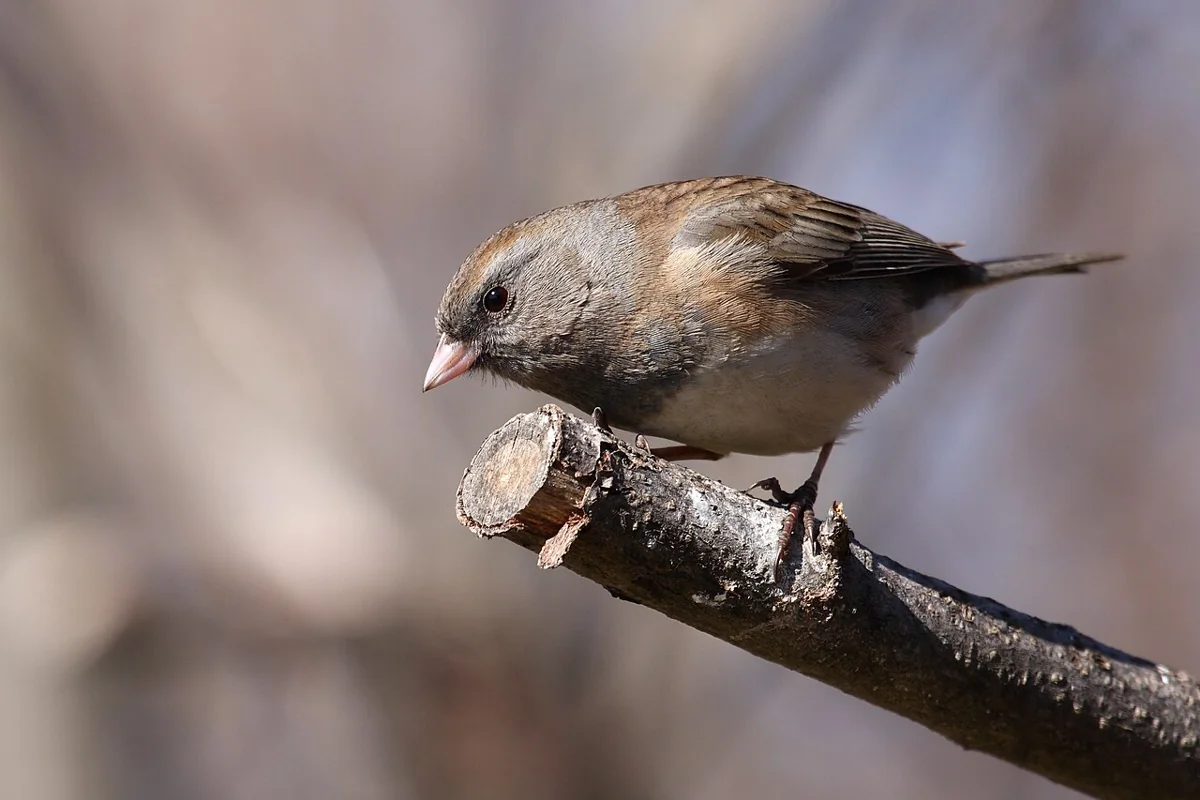
A tail can look narrow on one perch, broad in the next flight and almost absent when the bird points away. Those views may all belong to the same individual. To make tail observations useful, separate four questions. How long is it relative to the body, what outline does the end form, where are contrasting marks, and how does the bird move it?
Each question uses a different kind of evidence. Length needs a favorable view of body and tail together. Shape may require the feathers to spread. Pattern needs enough detail to resolve the relevant feathers. Movement needs time. Trying to combine all four into a single impression such as “long flicking tail” can hide which part you actually observed clearly.
Compare length within the same bird
Use the body as your reference, beginning near the base of the tail and following it to the tip. A side-facing bird often provides a helpful view. A bird facing directly toward you can conceal much of the tail behind its body, making a long-tailed species look short-tailed. Record the angle before turning that appearance into a structural claim.
Northern Mockingbirds offer an accessible example where they occur. Their elongated outline includes a conspicuous tail, which can change position during ordinary movements. Watch a familiar individual turn and compare its side and frontal views. The exercise teaches perspective with a known subject before you need to interpret an unfamiliar bird glimpsed briefly between branches.
Inspect the end when the feathers open
Field guides use terms such as square, rounded, pointed, forked and wedge-shaped for tail outlines. These describe arrangements of feathers, but the visible outline also depends on how widely the bird spreads them. A narrow closed tail may conceal a fork or make a wedge look like a simple point. Look for a natural opening during balance adjustments or flight.
A Mourning Dove’s extended pointed tail creates a different silhouette from the shorter tail of a Rock Pigeon. If you can follow a perched bird into flight, notice how the outline opens and how the outer feathers contribute to it. This paired observation helps connect the resting shape to the flight view, while keeping other local dove species in consideration.
Do not force a shape term when the view was unsuitable. “Tail held closed” is an observation. “Rounded tail” is an interpretation that requires seeing its end well enough. The first may explain why the second could not be established. Keeping that distinction makes a later guide comparison more honest and more efficient.
Place the pale marks precisely
White on the tail can mean white outer feathers, small corners, a terminal band or isolated spots. These arrangements are different clues. Describe where the pale area sits and when it becomes visible. A bird may flash pale outer feathers while spreading its tail, then conceal them again when it folds the feathers together.
Dark-eyed Juncos are useful practice subjects because white outer tail feathers can appear conspicuously during movement. Observe the transition from a quietly feeding bird to a short flight. The flash can help direct your attention, but a pale tail alone does not establish junco. Body pattern, bill and regional context still belong in the comparison.
On a distant bird, pale feathers may merge into one bright patch. A sharp photograph or a closer natural view can reveal the arrangement, but approaching is not always appropriate or necessary. Record the broad observation first. A note of “white at the outside of the spread tail” preserves more useful information than an unsupported count of individual pale feathers.
Describe movement as an action
A tail may lift, dip, flick sideways, fan or remain relatively still during the period you watched. Note the movement and its context. Did it happen once after landing, repeatedly while perched, or during feeding? A single balance adjustment is different from a recurring motion. Duration matters because a short view may miss a characteristic behavior.
Missouri’s identification guide contrasts the raised tail posture of a wren with the tail movements of an Eastern Phoebe. Such examples show how action can support a candidate group. They do not imply that every raised tail identifies a wren or that a brief flick proves phoebe. Compare structure, patterns and voice as well as the movement.
Recognize damaged or incomplete tails
Feather replacement and wear can alter the outline you expect from an illustration. A bird may have a short or uneven-looking tail during a molt, or a damaged feather may change its symmetry. If the shape seems odd, consider whether you can actually see the full feather set. Avoid inventing a rare species to explain one unusual silhouette.
The Common Grackle species account notes that late-summer molting birds can show shortened or ragged tails. That exception matters for a species commonly recognized by its long tail. The observation does not let you diagnose molt on every short-tailed black bird. It reminds you to compare additional features and season before excluding a plausible candidate.
Turn four questions into a compact record
Make four short lines in your notes, one each for relative length, end shape, marks and movement. Fill only what the encounter supports. A hypothetical record might say “long relative to body; tip hidden; pale corners in brief flight; fanned once after landing.” This example preserves the different strengths of the observations without turning them into a species verdict.
When you review candidates, check which line does the most work. Perhaps several species have long tails, but only one expected locally has the observed arrangement of pale corners. Alternatively, the strongest-looking clue may have been the least reliable view. A structured note helps you notice that problem before familiarity with a reference image makes the memory seem clearer.
Choose a useful next view
If end shape is missing, wait for a natural fan or departure on another visit. If marks are missing, a well-lit perched angle may help more than another distant flight. If movement is the question, remain still long enough to see a sequence. Matching the next observation to the gap keeps the exercise focused and reduces unnecessary following.
Tail observations become more informative as you connect these different views of familiar birds. You learn which changes come from posture and which patterns persist. An unresolved observation still contributes to that learning when its limits are clear. The result is a more precise description of the bird you saw, ready to be combined with head, wing and sound evidence.
Keep exploring
Start with the silhouette: size and shape
Separate structural clues from uncertain distance estimates.
What a bird’s bill can tell you
Use bill proportions without treating diet as a species verdict.
Read wing bars without losing the whole bird
Locate wing patterns and distinguish visible absence from a hidden mark.