
Fieldcraft
Count a flock without counting the same bird twice
Choose an estimate method and record movement and limits.
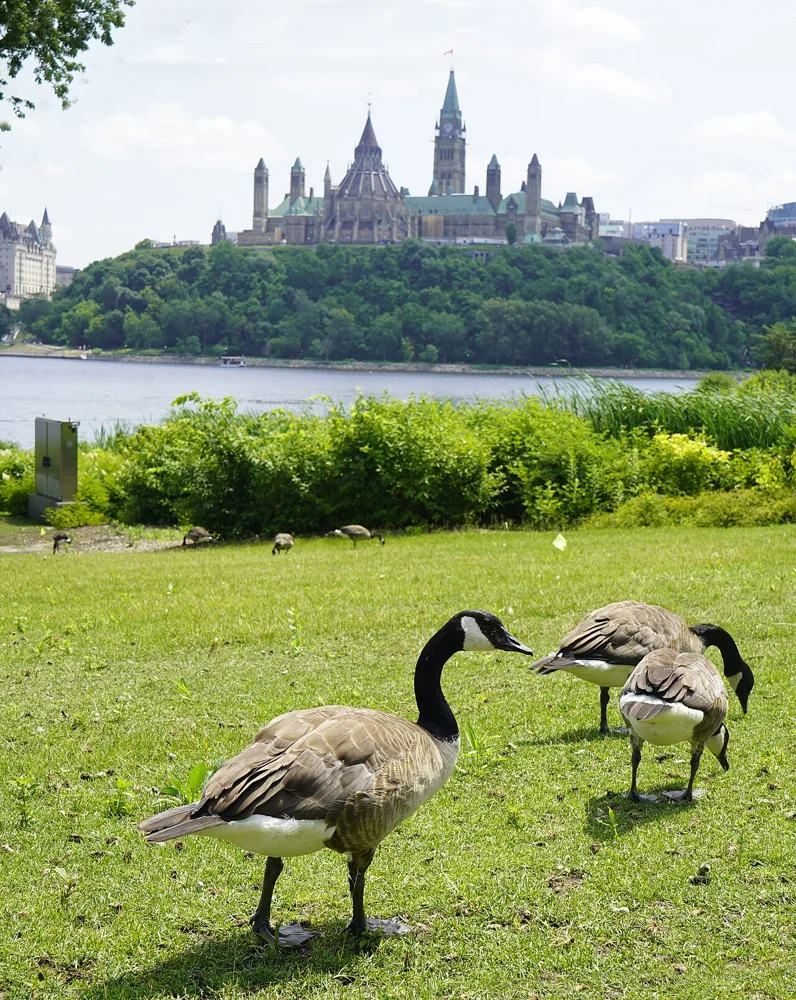
A flock changes shape while you watch. Birds leave the pond, disappear behind shrubs or circle back over the same lawn. Counting becomes easier when you first decide what you are counting and how the birds are moving. A careful estimate can be informative, provided the record explains its limits. An apparently exact total can be misleading if it includes the same individuals repeatedly.
Start with a defined observation area and period. For a short park visit, that might mean the visible pond and adjacent grass while you remain at one viewpoint. Note when you begin and finish. If you later walk to the other side, consider whether you will encounter the same birds again. That decision affects how you combine numbers from different parts of the visit.
Count individuals while the task stays manageable
When a small group remains clearly visible, count each bird once in a consistent direction. Move your attention across the group from one boundary to the other. If birds overlap, wait for a natural change of position rather than filling gaps with assumptions. A second pass can check the count while the group remains stable, but do not add the two passes together.
Separate identification from counting when necessary. You might count all visible waterbirds accurately while remaining unsure which species account for part of the group. Keep the overall count and the unresolved identification separate in your notes. Assigning every distant shape to the species you recognized nearby would add a biological claim that the counting exercise alone cannot establish.
Use blocks for a larger, fairly stable group
If individual counting becomes impractical, choose a block size you can still count carefully. Count that many actual birds in a visible section and use it as a rough visual reference for the remaining group. The block could be five or ten birds in an ordinary park setting. Choose the scale that fits the encounter, rather than using a larger number merely because the flock looks impressive.
Imagine a hypothetical lawn flock with a clearly counted group of ten at one edge. If the rest of the flock appears to contain about four comparable groups, your estimate would be about fifty birds overall. This is an arithmetic illustration with an assumed distribution. It becomes a weaker estimate if the birds behind are packed more tightly or many individuals are concealed by grass.
Look for changes in density and depth
A photograph or binocular view compresses a three-dimensional scene into a flat image. Birds farther away can appear closely packed, and a strip of water at the back of a pond may hold more individuals than an equally sized area in the foreground. A block counted near you may therefore be a poor template for the distant part of the flock.
Divide the scene into sections that make sense for its actual density. Count or estimate each section with an appropriate reference, and describe substantial concealment. If the flock keeps shifting between sections, a single total estimate may be more defensible than several totals added together. You can record a range in your private notes when it better expresses the uncertainty of the view.
Distinguish one passing flock from repeated movement
A flock flying past once can be counted in individuals or blocks as it crosses a chosen imaginary line. Keep your attention on the crossing and avoid restarting whenever the formation changes. If the flock circles back, mark that event. A second passage does not necessarily represent additional birds, even if you have a clearer view of them this time.
Rate-based counting can help with a sustained, consistent flow, but it requires conditions that a changing neighborhood flock may not provide. You need a measured interval and a reason to believe the flow remains comparable during the longer period. If the movement starts and stops unpredictably, extrapolating a brief burst across the entire visit can produce an inflated total. Record what you actually observed.
Handle feeders and returning birds cautiously
A bird leaving a feeder and returning a minute later creates another visit, not automatically another individual. eBird recommends the highest number seen together, supplemented by clearly different individuals where that distinction is reliable. In a private log, specify whether you are recording feeding visits or individual birds. These describe different things and should not silently replace one another.
Visible differences can sometimes establish a minimum number. Two male cardinals seen together and a female observed separately indicate at least three individuals, assuming the identifications and sex assessments are sound. Repeated sightings of one similar-looking male near the same shrub may still be one bird. Avoid turning every disappearance and return into a new addition to the total.
Keep uncertainty proportional to the method
If you estimated most of a flock in blocks of ten, a final number presented to the nearest individual suggests more precision than the method produced. Keep the estimate at an appropriate scale and explain the counting unit. If a reporting platform requires one number, follow its guidance and place your method and limitations in the comments. Your private notes can retain a fuller account.
Mixed flocks add uncertainty because species may cluster unevenly. A single sample from one edge can badly represent the whole group. Scan across the flock before estimating proportions, and count a conspicuous minority species directly when possible. If you cannot confidently identify the distant birds, preserve an unresolved group count rather than distributing them among familiar names simply to complete a list.
Write a count another visit can explain
A short method note gives the number a meaning. Include the area, duration, whether birds were stationary or passing, and whether you used individuals or blocks. Mention a return flight, dense vegetation or a hidden section of shoreline when relevant. Photographs can document an unusual count, but the picture and your note should belong to the same encounter.
When comparing later visits, check whether the area and effort were similar before interpreting a larger number. Detection changes with position, light, weather and movement. Counting carefully builds a record of what you encountered under defined conditions. The value lies in that connection between number and method, which remains understandable after the flock has moved on.
Keep exploring
Your first fifteen-minute bird walk
Run a small observation session with a clear start, route and note.
Set up binoculars before the bird appears
Adjust eye spacing, eyecups, focus and diopter in a repeatable order.
Find the bird before lifting binoculars
Transfer an unaided view to binoculars using landmarks and a steady stance.