
Identification
Recognize a young bird without guessing its age
Separate fledgling behavior, juvenile feathers and uncertain age.
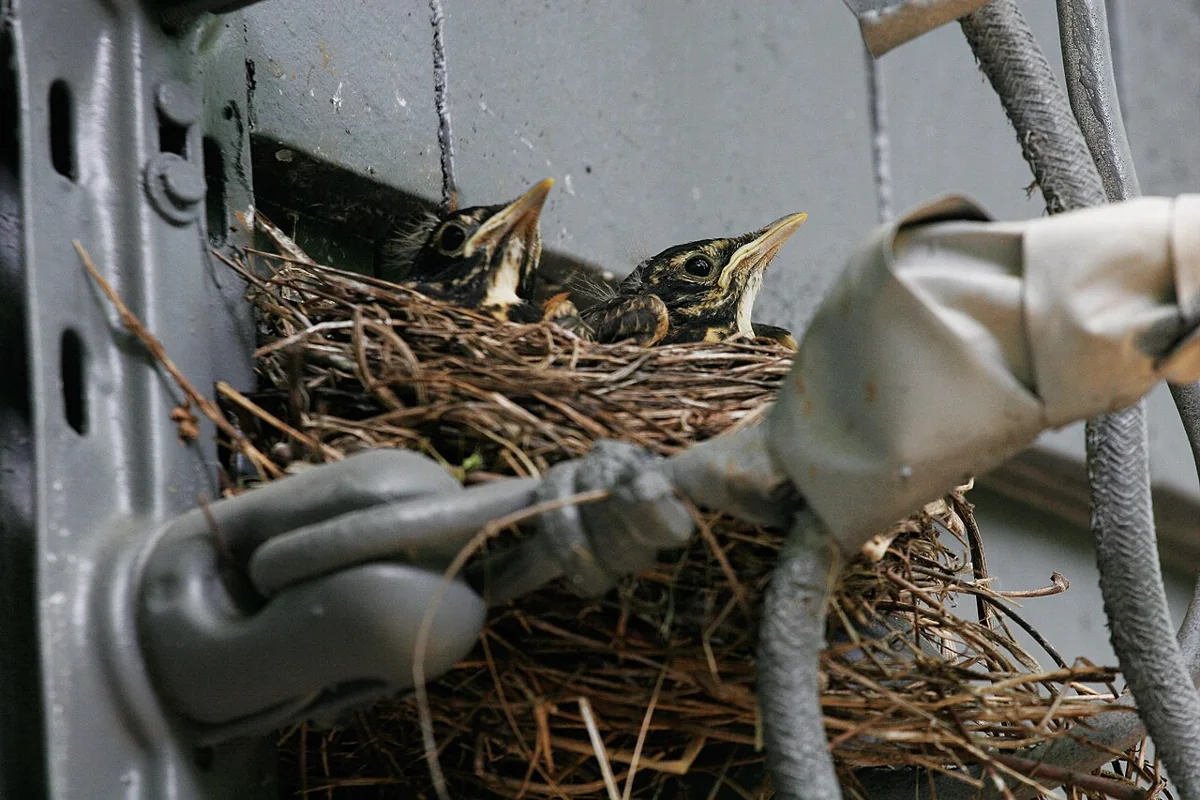
A familiar bird can produce an unfamiliar young version. A spotted robin, a dusty-brown starling or a dark-billed cardinal may look far removed from the adult image you remember. Recognizing that possibility broadens your candidate list. It also helps you avoid treating every unusual-looking neighborhood bird as a species you have never seen.
Separate three questions before choosing an age label. Which species fits the bird, which plumage stage can you recognize, and what evidence shows its level of independence? These questions overlap, but they are not interchangeable. A bird can already fly while retaining juvenile feathers, and a bird receiving food may reveal a family interaction without giving you its exact age in days.
Plumage and development describe different things
Juvenile plumage refers to an early feather appearance. Fledgling describes a bird that has left the nest, rather than one universal color pattern. The appearance and duration of these stages vary by species. You may have enough evidence to describe a young-looking bird while lacking the information needed to name a precise developmental stage.
A field guide’s labels can help you choose the appropriate photographs. Look for juvenile, immature and first-year examples where available, and read how the source defines them. “Immature” can cover a broader period than the freshly fledged bird you imagined. Avoid converting every label into a fixed age. The photographs illustrate appearances, while a specific age assessment may require much more detailed study.
The spotted robin
Young American Robins can show conspicuous dark spots across the underparts and mottling on the back. Their resemblance to the cleaner rusty-breasted adult can be easy to miss at first. Compare bill shape, body proportions and the arrangement of the underlying warm color as well as the spots. The whole combination helps connect the young bird with the familiar species.
Other thrushes can also have spotted underparts, so spotting does not by itself establish a juvenile robin. Check regional alternatives and the bird’s full pattern. A young robin on a lawn may be an accessible practice subject, but the lawn supplies context rather than proof. Study a labeled juvenile reference beside the adult account to see which features persist and which change.
The brown starling
Juvenile European Starlings can appear largely dusty gray-brown with dark bills, lacking the glossy or strongly spotted appearance that many people associate with adults. Their short tails and overall proportions become especially useful. If several birds feed together, inspect one individual at a time rather than assigning the flock the appearance of its brightest adult.
As feathers change, an individual can show a mixture of appearances. A patchwork bird may therefore fit a familiar species undergoing a normal transition. Compare a sequence of reference photographs when available. The mixed look does not establish an exact age or date of molt, and unusual feather condition deserves a broader comparison if the species itself remains uncertain.
The cardinal with a dark bill
Young Northern Cardinals initially have dark bills, unlike the brighter bills of familiar adults. A juvenile can consequently be confusing when your adult reference emphasizes a conspicuous bill color. Its crest, substantial bill shape and body proportions still provide useful clues. In a suitable region, compare the full young appearance before excluding cardinal because one adult feature is absent.
This example also illustrates why color and structure should be recorded separately. You might clearly see a deep conical bill while remaining uncertain whether it was dark or merely shadowed. A better-lit natural view could resolve that question. A dark bill alone cannot establish youth, since many other species have dark bills throughout adulthood.
Use begging behavior as context
Repeated food solicitation, fluttering wings and an adult delivering food can support the impression that a bird is young. Watch the actual exchange and identify the individuals involved where possible. A bird simply standing near an adult has not necessarily demonstrated a parent-offspring relationship. Several species can use the same feeding area at once.
Begging sounds can be less distinctive than the adult songs you know. They may direct you toward a family group without resolving the young bird’s identity. Connect sound with the visible caller and compare structure and plumage. When the source of a call remains hidden, keep it as an unidentified sound rather than borrowing the identity of the nearest visible adult.
Do not use awkwardness as an age test
A bird that seems hesitant, fluffed or clumsy may be young, but those impressions have several possible explanations. Wind, an unstable perch, feather condition and your brief viewing angle can all affect the scene. Describe the movement itself, such as a short hop or a missed landing. The behavior alone usually cannot tell you how old the bird is.
Similarly, a tame-looking bird should not invite a closer approach to inspect its age. Keep a distance that permits ordinary movement and feeding. If your presence interrupts an interaction, back away and give the birds space. The identification task can remain unfinished while the family continues its activities.
Build a stage-aware reference set
Keep local season in the comparison without treating it as a calendar deadline. Different species breed on different schedules, and individual nests can produce young at different times. A date helps you decide which appearances deserve attention. The plumage and behavior still need to match, especially if the bird seems young at an unexpected time of year.
Choose a few common species that change visibly as they mature. For each, compare an adult photograph with a labeled juvenile and note two differences and two shared features. Robin spots, starling body color and cardinal bill color provide three different kinds of change. Learning them separately prevents one generic “young birds are brown” rule from replacing actual species knowledge.
When recording an encounter, state the basis for the age interpretation. “Spotted underparts matching juvenile robin reference” is more informative than an unexplained “baby bird.” If only the species is clear, keep that name and leave age open. A record can remain accurate and instructive without determining every stage of the bird’s development.
Keep exploring
Start with the silhouette: size and shape
Separate structural clues from uncertain distance estimates.
What a bird’s bill can tell you
Use bill proportions without treating diet as a species verdict.
Read wing bars without losing the whole bird
Locate wing patterns and distinguish visible absence from a hidden mark.