
Identification
Start with the silhouette: size and shape
Separate structural clues from uncertain distance estimates.
A bird on a distant fence can seem much larger than the same bird beside a familiar feeder. A puffed-up bird can look round, then become unexpectedly narrow when it stretches toward a branch. These changes make structure worth studying carefully. Size and shape help you choose a useful group of candidates, provided you keep track of the viewing conditions and compare parts that you actually saw.
Begin with a question you can answer in the moment. Was the body compact or elongated? Did the tail extend conspicuously behind it? Was the bill fine and pointed or deep and conical? A few accurate descriptions will survive a difficult view better than an immediate guess at a species name. You can check those descriptions against photographs and a regional guide afterward.
Choose a comparison with a fair perspective
Relative size is easiest to assess when two birds occupy roughly the same distance from you. A House Sparrow on the same feeder can provide a useful comparison for a finch. A crow far behind that feeder provides a much weaker reference. Perspective can make the distant bird appear smaller even when its body is substantially larger. Note whether the comparison was genuinely side by side.
Familiar objects can help you remember the scene, but they rarely justify a precise measurement. A fence board may look standard while having an unfamiliar width. A branch can be thicker than it appears. Write “smaller than the robin beside it” when that happened. If there was no reliable reference, write “small songbird, size uncertain.” That description preserves the evidence without adding an invented number.
Break the silhouette into three relationships
First compare the head with the body. A bird may appear small-headed and slender, or large-headed and compact. Next compare the tail with the body rather than with the entire scene. Finally look at the bill in relation to the head. These relationships help you retain useful structural information even when the bird moves between perches or the background changes.
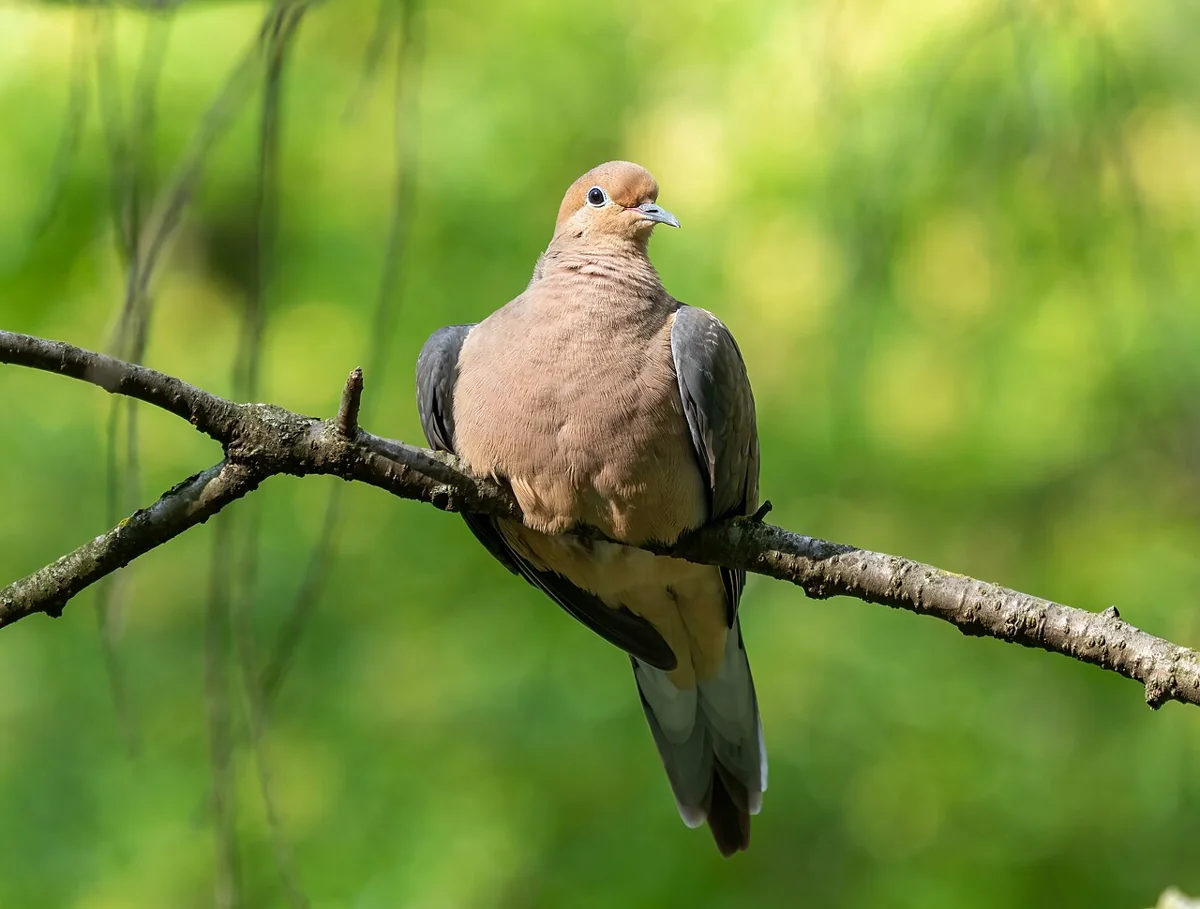
A Mourning Dove offers an approachable exercise. Its slim outline and extended pointed tail create a different impression from the heavier body and shorter tail of many Rock Pigeons. Watch the entire bird before concentrating on its color. Domestic variation makes pigeon plumage especially diverse, while the relationship between body and tail can still help organize a comparison. A single silhouette alone leaves room for other possibilities.
A woodpecker provides another kind of relationship. Compare the bill’s projection with the head behind it. Downy and Hairy Woodpeckers can look deceptively alike in isolated photographs, so the apparent size of the whole image contributes little. A favorable side view can reveal the short bill of a Downy or the substantially longer bill of a Hairy. Additional marks and geographic context still matter.
Wait for the posture to change
Shape includes both anatomy and the pose you happened to see. A stretched neck changes the balance between head and body. Fluffed feathers alter the outline. A turned head can make the bill seem short, and a foreshortened tail can nearly disappear behind the body. Record a view as uncertain when its angle hides the part you are trying to compare.
If the bird remains relaxed and visible, wait in place for a second posture. You might see it turn sideways, move to a different branch or briefly spread its tail. Compare the two views mentally. Features that persist across both views deserve more weight than a fleeting outline created by one pose. Avoid moving closer simply to force a better angle, particularly around nesting activity.
Use movement to check the outline
Movement can expose a structural clue that a perched view concealed. A bird leaving the ground may show a long tail or broad wings. A nuthatch turning on a trunk reveals a different profile from its head-on view. Watch the first few movements before looking away to consult a screen. The transition can connect the perched shape with the bird you see flying away.
Flight introduces its own uncertainty. Tail spreading changes the apparent outline, and a banking bird can make one wing look much shorter than the other. Do not transfer a shape rule from a photograph without considering the flight position. Describe what was visible and how the bird was moving. “Tail appeared pointed while spread briefly” is more informative than an unexplained assertion that the tail proved the identification.
Try a short observation exercise
Choose one ordinary bird that you can watch comfortably from a permitted path or window. Spend the first view on the whole silhouette. During the next view, compare head, bill and tail proportions. Then watch a change of posture or a short movement. Keep the session small enough that you can remember what each observation added, rather than collecting a long list of uncertain impressions.
Write three sentences before consulting a species account. The first describes the body and head. The second describes the bill or tail from the best angle. The third records the weakness of the observation, such as backlighting or an obstructed view. Compare your description with a candidate afterward. If a guide reveals a feature you never saw, leave that feature unrecorded until another observation supplies it.
Let the evidence set the next step
A useful next step follows the actual gap. If body size was unclear, seek a natural side-by-side comparison on a later visit. If the bill was hidden, a relaxed side view may help. If several species share the same proportions, move on to patterns, voice and regional context. More attention to the same ambiguous silhouette may add less than one different kind of observation.
Keep an uncertain group-level label when the view ends too soon. Your note still records an observation you can learn from, and it avoids teaching you a mistaken association between a name and an unreliable impression. With repeated familiar birds, the relationships become easier to notice. The immediate goal is a description that another view can confirm, refine or correct.
Keep exploring
What a bird’s bill can tell you
Use bill proportions without treating diet as a species verdict.
Read wing bars without losing the whole bird
Locate wing patterns and distinguish visible absence from a hidden mark.
A practical map of bird head markings
Record eyebrow, eye line, crown and throat as separate observations.