
Look-alikes
Downy or Hairy Woodpecker?
Use bill proportions and tail evidence when absolute size is unreliable.
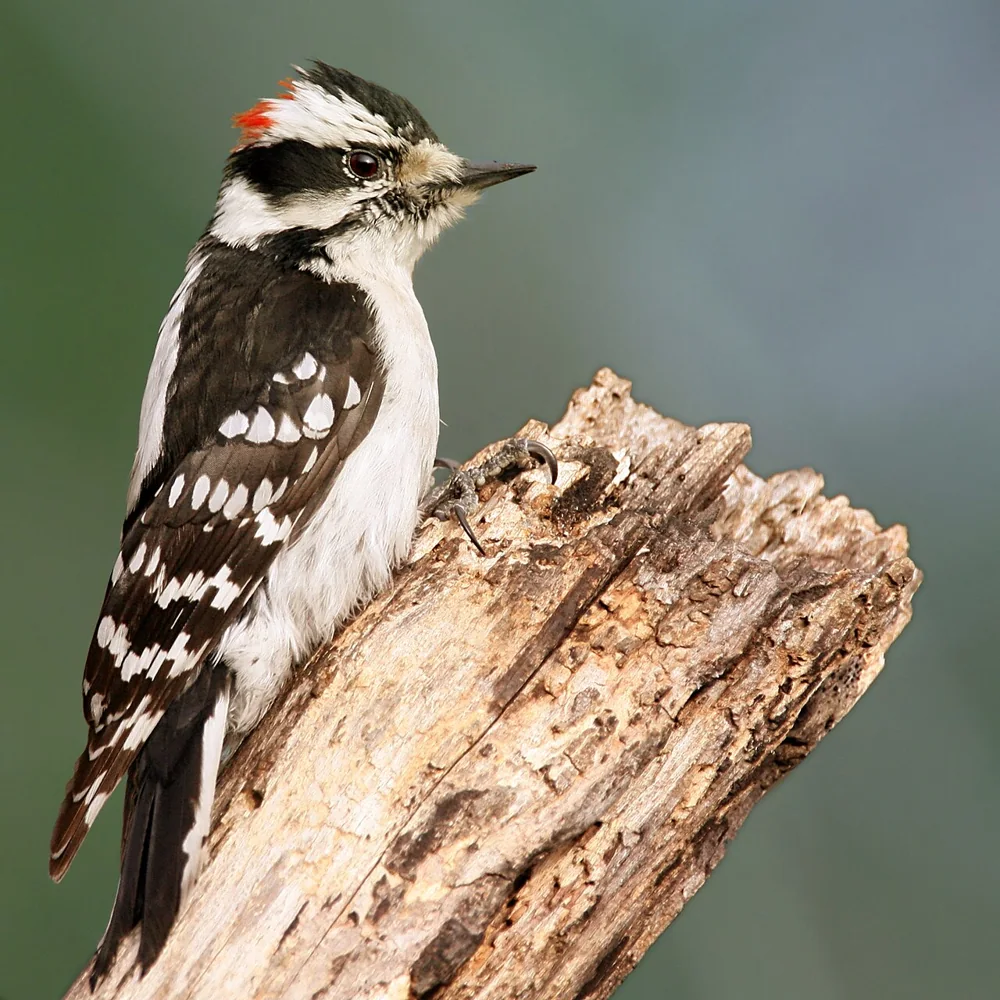
A black-and-white woodpecker on a park tree can look familiar long before you know which of these two species you are watching. Downy and Hairy Woodpeckers share a pale stripe along the back and a strongly patterned face. Their resemblance makes an isolated photograph difficult to judge by apparent size. A better comparison gives the bill and outer tail their own clear views.
The two species occur together in many places. Downy Woodpeckers readily use a variety of neighborhood settings, while Hairy Woodpeckers often favor places with larger trees. That ecological difference can help you decide where to look, but a bird’s presence on a small branch or in a city park cannot establish its identity. Keep habitat as context while you examine the bird itself.
Begin with the shared pattern
First make sure the comparison fits your observation. Look for the pale central back, dark wings marked with white, and alternating dark and pale face stripes. Other woodpeckers in your region may share some colors while differing in the overall pattern. A local guide helps you decide whether these two species are the right candidates before you concentrate on their finer differences.
Do not use a red patch at the back of the head to separate this pair. Adult males of both species can show red there, while adult females lack that patch. The presence of red can therefore tell you something about an individual’s appearance without answering the species question. Check photographs that match the view and plumage you actually observed.
Look at bill length in a side view
A Downy Woodpecker has a notably short bill relative to its head. A Hairy Woodpecker carries a much more substantial bill, often appearing nearly as long as the head behind it. You do not need to estimate inches to compare these proportions. You do need an angle that exposes the projection of the bill rather than pointing it toward or away from you.
When the head turns, follow the change before deciding. A long bill can seem surprisingly short when foreshortened. Feathers around the bill base can also affect the impression. If you only saw the bird face-on, record that limitation. A clear side profile is more useful than a long period staring at an angle that conceals the feature you need.
Check the pale outer tail feathers
Downy Woodpeckers typically show small dark marks on the pale outer tail feathers. Hairy Woodpeckers generally show those pale outer feathers without the same dark barring. The comparison concerns the outer tail rather than the dark central support feathers. A bird pressed against a trunk may hide the relevant area, so identify which feathers are visible before interpreting their pattern.
A pale-looking tail at distance is weaker evidence than a close, sharp view that resolves the individual feathers. Tiny dark marks can disappear through blur or glare. Conversely, a shadow crossing the tail can resemble a mark. Wait for a change of position, or use an existing photograph at original quality if you have one. Keep an unresolved tail separate from a confidently observed pattern.
Combine the observations
A short bill seen repeatedly in profile, together with dark marks on the pale outer tail, provides a coherent case for Downy Woodpecker. A long bill and clearly unmarked pale outer feathers support Hairy. If the clues appear to disagree, first examine whether perspective or image quality could explain the conflict. Do not quietly discard the inconvenient detail.
| Observation | What it adds |
|---|---|
| Short bill in a clear side profile | Supports Downy |
| Long, substantial bill in profile | Supports Hairy |
| Dark marks resolved on pale outer tail | Supports Downy |
| Pale tail seen only at distance | Leaves the tail comparison unresolved |
The table is a way to organize evidence, not a scorecard. Two weak impressions do not automatically equal one reliable observation. Several photographs of the same obscured tail still leave the pattern hidden. Favor the quality and independence of the views over the number of times you looked at them.
Use size when the reference is fair
A Hairy is larger than a Downy, and a direct comparison can make that difference clear. The challenge is knowing whether the comparison was direct. Two birds at different distances or in separately scaled photographs can reverse your impression. A known feeder or branch may help you remember the scene, but it rarely gives a dependable measurement without additional information.
If you see both species naturally at the same distance, take time to notice their bill and body proportions together. That experience can improve your familiarity with later views. Avoid turning a remembered impression into an absolute rule. A fluffed Downy and a sleek Hairy can look different from the postures you learned, and regional variation can affect plumage details.
Listen without forcing a phonetic match
The species accounts describe differences in calls and rattles. Learning those sounds from several labeled recordings can provide another line of evidence. A written syllable is only an approximation of what a person hears, and distant sound can change with background noise. When you hear a call, try to connect it to the visible bird before adding it to the identification.
Drumming introduces a separate acoustic comparison. A bird tapping while feeding and a bird performing a display drum need not sound alike, even within the same species. This page focuses on visible separation. If sound is the main evidence, study a dedicated sound reference and retain your recording where possible. Avoid playing calls to provoke a response for the sake of the comparison.
Practice: Can you call it a Downy?
Hypothetical sighting. A black-and-white woodpecker faces you on a tree trunk. Its bill looks short, but you see it head-on. The trunk hides the outer tail feathers. Is that enough to identify a Downy Woodpecker?
Show what you can conclude
The species is still uncertain. The short-looking bill is an impression from the front, where a longer bill can look shorter. The hidden tail gives you no evidence about its markings. A useful note would be “Black-and-white woodpecker, bill seen head-on, outer tail feathers hidden.”
Next view to wait for: Let the bird turn naturally. Compare how far the bill projects with the length of the head in profile. Check the pale outer tail feathers separately if they come into view. If the bird leaves before either view, save your observation under the broader label.