
Seasons & habitats
Why familiar birds look different in fall
Separate seasonal feather changes from age, sex and species.
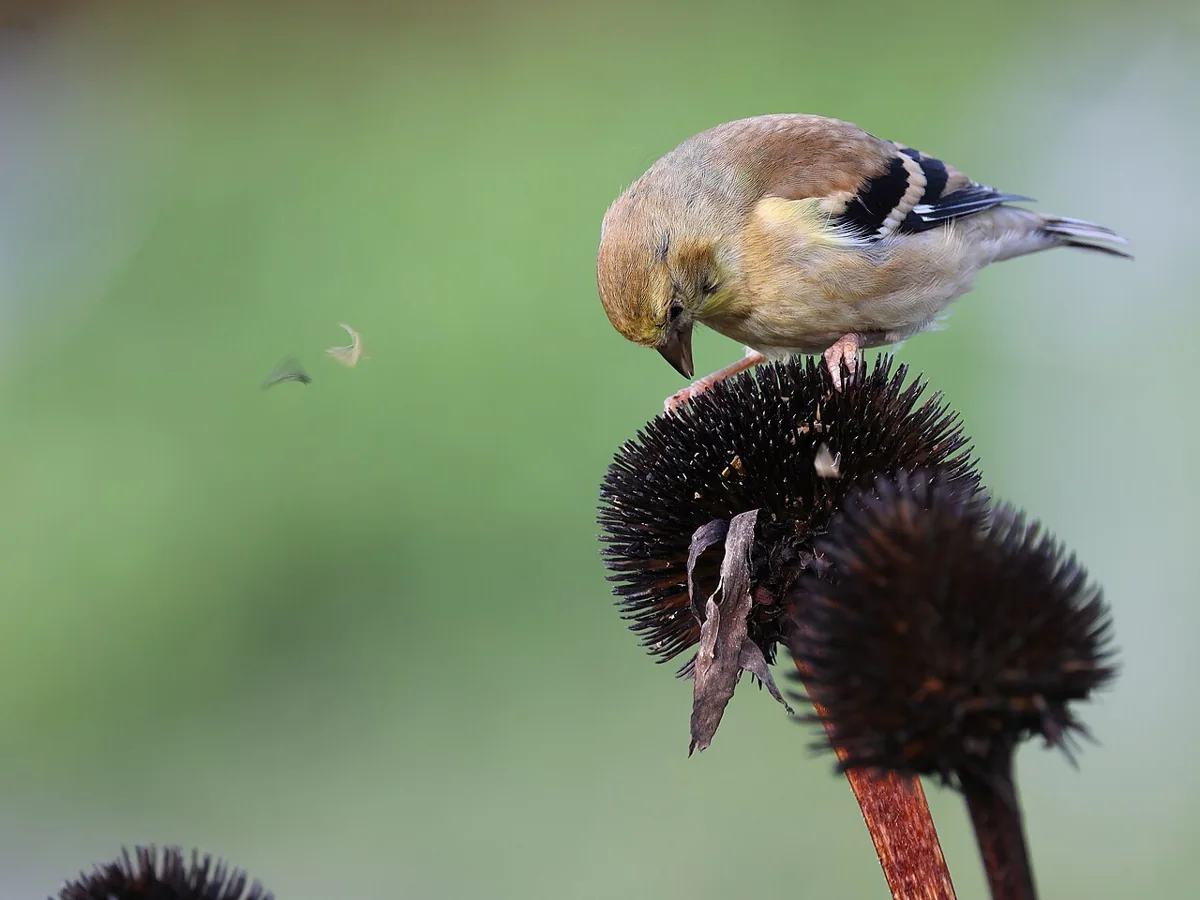
A bird that looked obvious in spring can become puzzling later in the year. An American Goldfinch may lose the bright body color you used as a shortcut. A European Starling may show many pale spots. A familiar pond may contain brown ducks where you remember green-headed males. Begin with the possibility that appearance changed before deciding that every unfamiliar plumage belongs to a new species.
Season is only one part of the explanation. Age, sex, feather replacement, feather wear and viewing light all affect what you see. Migration can also bring genuinely different birds into the same patch. Work through those possibilities using structure and pattern as well as color. A calendar label such as “fall bird” cannot identify the individual in front of you.
Distinguish replacement from wear
Molt replaces feathers. Wear changes the appearance of feathers that remain in place. Those processes can produce different seasonal effects, so a bird’s spring and autumn looks do not always come from the same mechanism. Fresh pale tips may conceal darker areas that become more visible as the tips wear. A changed pattern therefore does not always require a new set of feathers.
When reviewing a species account, look for its explanation of the change. Avoid applying one bird’s molt sequence to another. Species differ in which feathers are replaced and when, and individuals can show intermediate appearances. If the account does not support the age or molt stage you suspect, keep the description at the level you can document.
Use the goldfinch as a pattern exercise
The bright yellow-and-black male American Goldfinch is a memorable breeding-season image. Nonbreeding birds can look much browner or grayer. Their small finch structure and contrasting dark wings with pale bars remain useful clues. Compare the arrangement of the wing pattern with the whole bird instead of searching only for the strong yellow body you remember.
A partly changing bird can combine bright and dull feathers. Observe where the colors occur, and compare photographs of several labeled seasonal appearances. A dull goldfinch is not automatically a female, and a patchy bird is not automatically diseased. The season and the feather pattern may explain the view, but assigning sex or condition requires the appropriate additional evidence. In your note, place body color and wing pattern in separate sentences, so a change in one does not erase the stable features you observed in the other.
Read a starling’s spots differently
European Starlings provide a useful contrast. Fresh autumn plumage can be heavily marked with pale spots. These pale feather tips gradually wear, helping produce the darker glossy appearance familiar from the breeding season. The short tail, pointed wings and slender bill remain valuable structural clues when the body pattern looks different from your first reference photograph.
Young starlings add another layer because they can look largely brown or gray before acquiring a more adult-like pattern. A mixed flock may therefore contain several appearances at once. Follow individuals carefully and avoid combining one bird’s head with another’s body in memory. If a photograph shows more than one plumage, identify which individual your note describes.
Allow for less obvious male ducks
Male Mallards can pass through a less conspicuous eclipse appearance after breeding, and their familiar green head may be reduced or absent. A group that appears mostly brown should therefore receive a closer comparison before you label every bird female. Look at the bill and other species-specific details supported by a reliable regional reference.
Park ducks also include domestic birds and hybrids, which can complicate an already variable scene. A seasonal explanation cannot make every unusual duck a typical wild Mallard. Compare the whole pattern, proportions, location and other plausible species. Leave an individual unresolved when the necessary features are hidden, particularly in a distant crowded group.
Keep age and sex as separate questions
A brown bird may be a female, a juvenile, a nonbreeding adult or a different species. The answer depends on the group and its actual marks. Start with the identification and then ask whether the view supports an age or sex assignment. You can record a bird confidently to species while leaving those other fields unknown.
Juvenile patterns may differ from later immature or adult plumages. A young robin’s spotted underparts, for example, should be assessed using a robin account rather than a universal rule about streaked young birds. Compare the relevant photographs and descriptions for the candidate species. General expectations help you ask a question, but the individual account supplies the meaningful distinction.
Check the light before explaining the feathers
Shade, glare and backlighting can change perceived color within seconds. A glossy bird may look plain dark until it turns. A pale feather edge may disappear against a bright background. If the bird remains relaxed and visible, wait for a natural change of angle. A second view under similar distance can help distinguish a lighting effect from a stable pattern.
When using photographs, retain a natural rendering. Strong adjustments to contrast, color or sharpening can exaggerate patterns and create apparent edges. Keep the original available and note the conditions. A photograph that fails to resolve a feather tip leaves the feature uncertain, even if a highly enlarged display makes the surrounding pixels look more dramatic.
Build a seasonal comparison that stays honest
Choose one familiar species and record its appearance over several visits. Note date, major clearly visible patterns and any uncertainty about age or sex. Unless you can recognize the individual, describe the series as observations of the species at that place, rather than a proven transformation of one bird. Different individuals may arrive as the season progresses.
Review the sequence against the species account and local seasonal context. You may find that feather replacement, wear and migration each explain part of the change. Preserve the observations that do not fit neatly and seek a broader comparison when needed. Learning seasonal appearance expands the set of familiar birds you can recognize while keeping the details of each encounter open to correction.
Keep exploring
Read a range map as a starting point
Combine season, region and local habitat rather than treating a boundary as a fence.
Why migration dates vary from place to place
Interpret broad seasonal patterns without promising an arrival date.
Find the small habitats inside a city park
Plan an accessible observation route across lawn, edge and canopy.