
Seasons & habitats
Find the small habitats inside a city park
Plan an accessible observation route across lawn, edge and canopy.
A city park can look like one green space on a map while containing several different places for birds to feed, rest and hide. Short grass, dense shrubs, large trunks and the upper canopy offer different surfaces and cover. Reading those smaller habitats helps you choose a route with varied observations, even when you have only a short visit available.
Begin with access. Check the park’s current paths, opening hours and closures, then choose a route that suits your mobility and time. A rich patch of vegetation behind a fence can remain useful habitat without being a viewing destination. You can study its edge from a public path while allowing the interior to provide the cover that makes it valuable.
Choose three contrasting stops
Look for a lawn or open ground, a shrub edge and a group of trees along an accessible route. They need not be far apart. A bench beside grass may also face shrubs and a tree line, allowing several observation angles from one place. The aim is to vary the habitat you examine while keeping the visit manageable and comfortable.
At each stop, spend enough time to see a short sequence rather than a single movement. Note what the bird used and what it did there. A species list tells you which names you recognized. A habitat note explains why a particular patch deserved attention and gives you a question to revisit when the season or vegetation changes.
At open ground, watch the transitions
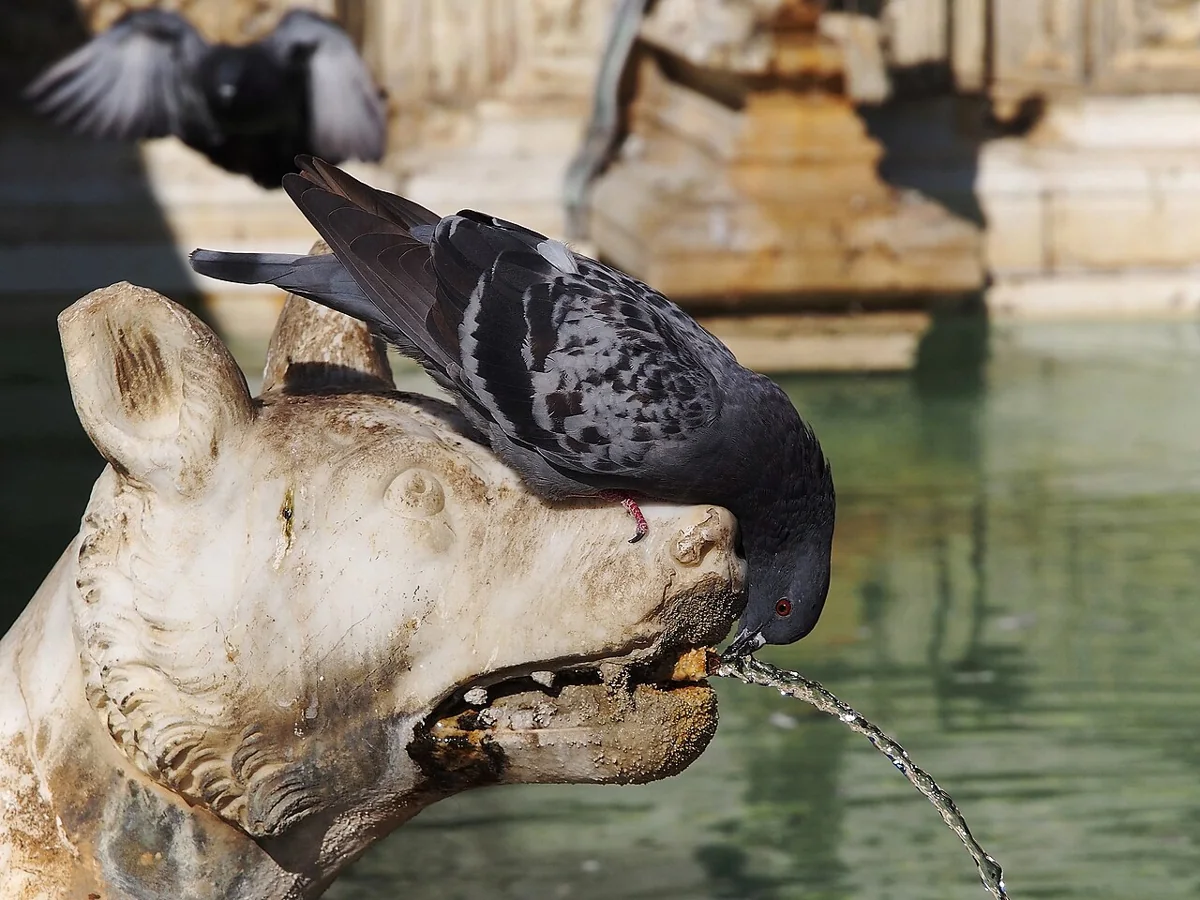
Lawns and bare patches can make birds easy to see. American Robins may run and pause while searching, while pigeons, sparrows and other birds can use the same open area in different ways. Watch where birds enter from and where they go after feeding. The nearby cover can be as important to the scene as the grass on which the bird becomes visible.
Keep ground conditions in your description. Short grass, leaf litter and a newly disturbed patch provide different viewing and foraging situations. A bird standing still is easier to study than one moving behind tall stems. Avoid equating visibility with habitat quality. An open lawn may reveal birds clearly while concealing how much they rely on adjacent vegetation.
At the shrub edge, give cover time
Low, dense vegetation provides a different set of opportunities. A cardinal may move between a visible branch and the interior, while another small bird stays near the ground. Wait for natural openings instead of pushing into the shrubs. The first movement you notice may reveal where to look without exposing enough detail for identification.
Inspect the outer structure. Dense branches, gaps near the ground and fruiting stems can all influence where activity becomes visible. You do not need to identify every plant to record the pattern. Write a broad description such as “dense shrubs beside leaf litter” and add a plant name only when you can support it. Regional plant resources can help later.
At trees, divide the space vertically
A tree is more than one surface. The trunk, large limbs, fine twigs and leaves create distinct observation zones. A nuthatch exploring bark can share the same horizontal space with a chickadee searching twigs. Scan one zone at a time, then lower the binoculars to recover the whole tree. This approach helps you retain where each bird was working.
Look at the vegetation below the canopy too. A shaded area with shrubs and ground cover has a different structure from isolated trees over closely cut grass. Extension guidance on urban bird habitat emphasizes the value of varied vegetation forms. For an observer, those layers provide a practical framework for searching without assuming that every layer will hold a different species.
Follow edges without treating them as guarantees
The boundary between lawn and shrubs or between a path and woodland can make movement easier to see. Birds may cross an opening or pause at the edge. Choose a viewpoint that lets you watch these transitions while remaining out of the way of other visitors. An edge can be productive, but it does not replace deeper cover or suit every bird equally.
Noise and people affect what you can detect. A busy path can make small calls harder to hear, while activity elsewhere in the park may temporarily shift birds out of view. Record those conditions when comparing stops. Avoid concluding that an empty-looking patch has no birds after one brief visit in a noisy period.
Allow the route to change with the season
Leaves, seeds, fruit and insects change through the year, altering the way birds use familiar vegetation. A tree that draws little attention during one visit may become a feeding site later. Bare branches can improve your view in winter while the birds themselves use sheltered places nearby. The same route can therefore remain interesting without requiring a new destination each week.
Keep local limits in mind. A plant or seasonal schedule described for North Carolina may differ from one in southern Canada or the western United States. Use regional sources for specific plant names and timing. The broad observation method transfers more readily than a promise that a particular shrub will attract a particular bird in every city.
Consider a seated alternative for each stop. A clear view from a bench can support the same habitat question while reducing the need to stand or walk for long periods.
Make the comparison fair
Record the approximate time spent at each stop and whether you watched the same area. A long wait beside shrubs and a quick walk across a lawn produce different detection opportunities. If you revisit the route, retain the same stop names and note any closure, maintenance or vegetation change. This makes later differences easier to interpret.
A hypothetical route note might describe robins on open grass, a cardinal moving through low cover and a nuthatch on a mature trunk, with the canopy unresolved in glare. It links birds to visible settings while keeping the poor view explicit. On the next visit, you can examine that canopy from another permitted angle and build on the observation without needing a longer walk.
Keep exploring
Read a range map as a starting point
Combine season, region and local habitat rather than treating a boundary as a fence.
Why migration dates vary from place to place
Interpret broad seasonal patterns without promising an arrival date.
Watch birds around a park pond
Observe water, shore and vegetation without assuming all waterbirds are ducks.