
Look-alikes
House Finch or Purple Finch?
Compare face, streaks and bill on both sexes.
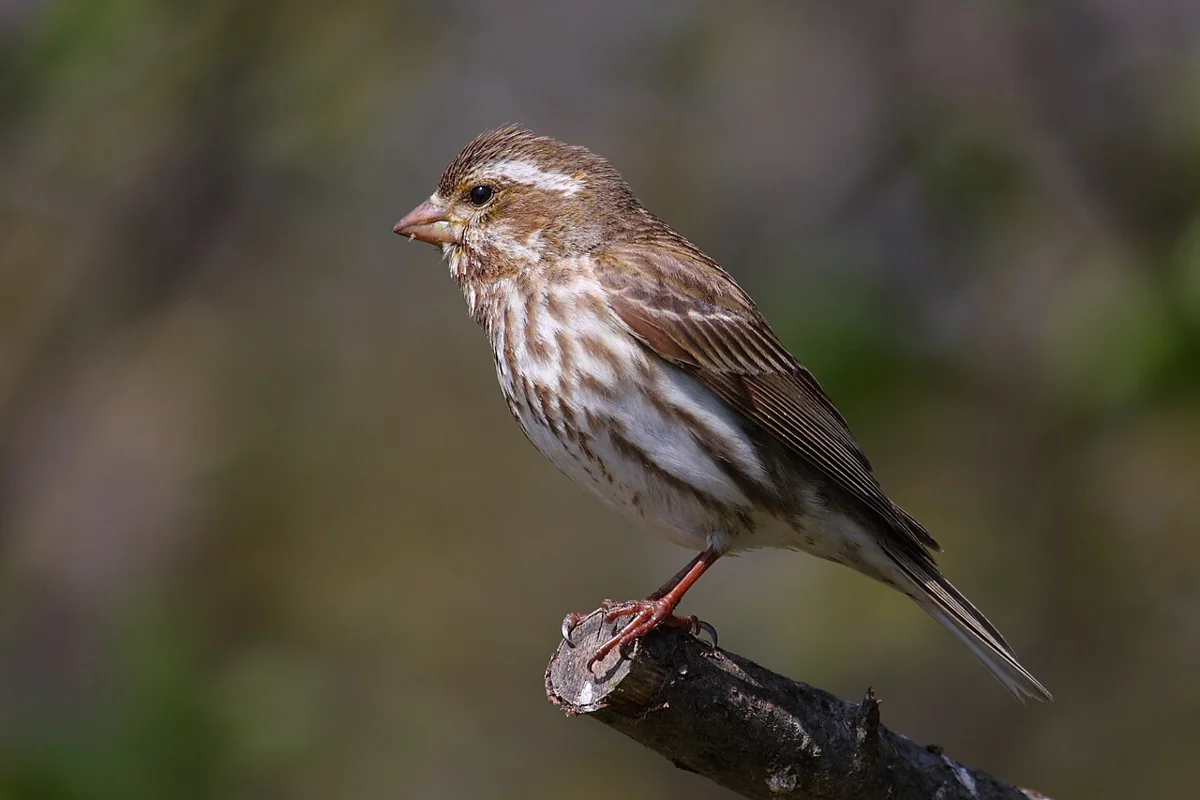
A red finch at a feeder invites an immediate color comparison, but brown birds often provide the better lesson. House Finches and Purple Finches both include individuals with little or no red, and a bright male can appear dull in shade. Start by finding a view of the face and a separate view of the flanks. These two areas help you compare the birds even when color is unreliable.
Keep the comparison regional. House Finches are widespread around settled areas. Purple Finches have a more variable seasonal distribution, including northern and Pacific breeding areas and winter movements into other regions. In parts of the mountain West, Cassin’s Finch adds another important possibility. A two-species comparison is appropriate only after you consider the birds that occur where and when you are watching.
Ask for two views before deciding
The face and the lower side of the body answer different questions. A front-facing bird can show the forehead and throat clearly while hiding the flanks. A bird turned away can expose streaking but conceal the eyebrow and cheek. Wait for an ordinary change of position rather than interpreting a hidden area as a plain one. You need observations of the bird, not a perfect pose.
Use your notes to keep these views separate. For example, write “face seen briefly, side obscured by feeder” if that describes the encounter. You can still suggest a candidate, but you have preserved the reason for caution. When another bird arrives, avoid combining its visible side with the first bird’s face. Feeders can hold several individuals that differ in sex, age and appearance.
On red birds, look beyond the redness
Male House Finches typically have red concentrated around the forehead, eyebrow, throat and upper breast, with brown elsewhere and dark streaking along the sides. Some show orange or yellow in place of red. The amount and apparent intensity of color vary, so an unusually bright or dull bird should send you back to pattern and structure rather than directly to a different species.
Many male Purple Finches show a broader rosy wash over the head and foreparts. Compared with a typical red male House Finch, they generally have a less obviously streaked lower side. Look for the distribution of the wash and the appearance of the flanks together. A red breast by itself leaves too much unresolved, especially under warm light or when the bird faces directly toward you.
Body proportions can support the comparison. Purple Finches often create a chunkier, larger-headed impression, while House Finches may appear slimmer and relatively long-tailed. Treat that impression cautiously when feathers are fluffed or the viewing angle is awkward. A useful pattern comparison deserves more weight than a vague memory that one bird looked heavier than another seen on a different day.
Brown birds make the face important
Female and young Purple Finches generally show a stronger face pattern than House Finches. Look for a noticeable pale eyebrow and a darker cheek or whisker area that divide the face into contrasting sections. A female House Finch usually has a comparatively plain brown face. These are relative descriptions, so compare several well-labeled reference photographs instead of memorizing one unusually crisp individual.
Both species can show streaking underneath. The presence of streaks therefore does little by itself to separate brown birds. First record how the face is organized, then examine the streaking and the overall proportions. If the face remains in shadow, the most useful distinguishing information may still be missing. A streaked brown finch can remain a finch species in your private notes until a better view arrives.
Use the bill as supporting structure
Both birds have conical finch bills, so merely noticing a thick seed-eating bill will not settle this comparison. Observe its profile from the side and compare it with the entire head. Photographs in regional guides can help you learn how the proportions differ, but viewing angle and image scale make isolated bill impressions easy to overstate. Avoid using an unsupported measurement from a distant feeder view.
Keep species accounts open together when reviewing the sighting later. Compare the relevant sex or age appearance and a similar angle. A male portrait and a female side view answer different questions. If your observation was a brown bird, spend most of the review on brown birds. Otherwise the familiar red male may dominate your memory without addressing the features you actually observed.
Let place and season refine the possibilities
A current regional resource can show whether Purple Finches are expected locally in that season. Such context changes how you investigate the observation, but it does not manufacture a missing field mark. A likely House Finch still deserves a careful look. An unexpected Purple Finch requires better documentation, including the features that make the common alternative less plausible.
In western areas where Cassin’s Finch is a realistic candidate, broaden the comparison before choosing a name. This page concentrates on House and Purple Finches and cannot resolve every western finch encounter. A regional guide and clear photographs can supply the additional comparison. If the necessary details were hidden, use a broader label and describe the limitation rather than forcing the sighting into this pair.
A note that preserves the useful clues
Consider a hypothetical feeder observation of a brown finch. A helpful note might describe a conspicuous pale eyebrow, dark cheek border, streaked breast, and a short clear side view. The candidate Purple Finch then follows from observations that can be checked. If only breast streaks were visible, the same candidate would have a weaker basis. Use the note to identify which feature you still need to see.
Before closing the record, ask which alternative you considered and which observed feature separates it. You may find that you need one more view of the face or side. Leave that question in the note for your next visit. Careful comparison builds familiarity with both species, including the ordinary brown birds that rarely resemble the brightest illustration in a field guide. Keep the date and location with that description.