
Look-alikes
Mourning Dove or Rock Pigeon?
Compare tail, body and wing marks despite variable pigeon colors.
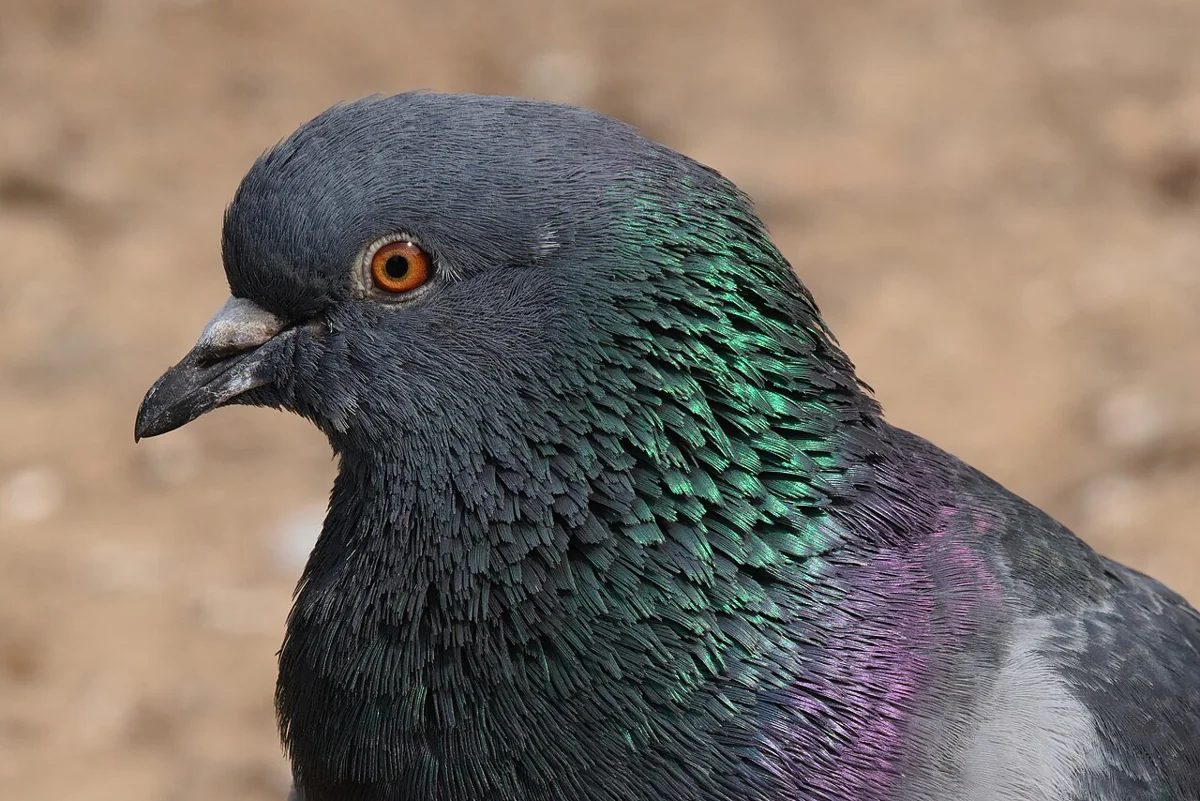
On a city sidewalk, a slender brown bird may feed beside several large gray birds, making this comparison seem easy. It becomes less obvious when the birds are alone or when a Rock Pigeon has an unfamiliar brown, white or mottled appearance. Compare their body and tail proportions before using the familiar gray pigeon pattern as your definition.
Mourning Doves generally look slimmer, with small heads and long pointed tails. Rock Pigeons tend to look bulkier, with shorter tails. These relationships can remain useful across varied plumages, provided your view exposes the whole bird. A bird facing directly toward you may conceal much of its tail, and fluffed feathers can alter the apparent body shape.
Read the outline from head to tail
Choose a side view and follow the bird’s upper outline. Notice the transition from the small head into the body, then the distance the tail projects beyond it. A Mourning Dove often gives a long, tapering impression. A pigeon generally looks more substantial and compact. Use the comparison within one bird rather than comparing differently cropped photographs on a screen.
If two birds stand at roughly the same distance, relative size can support your assessment. A distant pigeon and a nearby dove are less useful references for one another. Fence rails, branches and pavement markings can help you remember the setting, but their apparent dimensions rarely justify a precise estimate of bird length. Keep a doubtful size judgment separate from a clear tail view.
Wait for the tail to show its end
The Mourning Dove’s long pointed tail can be conspicuous in a good perched or flight view. Pale outer areas may show when it spreads. A Rock Pigeon has a shorter, broader-ended tail that creates a different outline. Watch the feathers change position during an ordinary landing or departure, since a tightly closed tail can hide its full shape.
A bird partly behind a curb or clump of grass may appear short-tailed even when it is not. Mark that view as obstructed. If you have a photograph, inspect whether the tip is actually present in the frame. A cropped image cannot establish that the bird lacked the missing portion, and a long lens can make the visible body seem larger than it looked unaided.
Compare the wing pattern
Mourning Doves commonly show dark spots on the folded wings against a relatively plain brownish background. The familiar ancestral Rock Pigeon appearance includes two dark wing bars on a pale gray body. Spots and bars occupy different arrangements, so describe the pattern rather than merely writing that the wing contained black.
Rock Pigeons vary extensively. Some have darker checkering, much white or other patterns that depart from the familiar gray bird. Missing the standard wing bars therefore cannot eliminate pigeon. When pattern is unusual, return to the body, head and tail relationships and compare a range of labeled feral pigeon photographs.
Let color vary without losing the structure
A brown Rock Pigeon can invite a dove identification if color dominates your search. Likewise, a Mourning Dove in cool shade may appear grayer than expected. Ask where the major marks sit and how the bird is built. Color can support the comparison after those features fit, rather than selecting the species before you inspect them.
Glossy neck colors on some pigeons can also change with angle and light. A flash of green or purple may be striking, but its absence in another view is unsurprising. Keep such reflections in a separate note. They provide less dependable structural information than a clear side view of the same bird.
Young doves add another appearance
Juvenile Mourning Doves can have a scaly-looking feather pattern that differs from the smoother adult appearance. That can make the bird seem unfamiliar even when the basic outline is consistent. Compare a labeled juvenile image before concluding that the pattern indicates another species. Young birds still require the same region-aware comparison as adults.
The scaly appearance itself is not exclusive to Mourning Dove. Smaller ground-doves and other regional species can enter the comparison in suitable places. A young bird with a partially hidden tail may remain unresolved. Avoid estimating its age from a photograph or assuming that an unfamiliar pattern proves it is a juvenile.
Ground behavior overlaps
Both species can walk and feed on the ground in human-modified settings. A flock pecking on a lawn or pavement therefore supplies only broad context. Notice whether the bird’s movements expose useful views of its sides and tail. The activity is an opportunity to inspect identification clues, rather than a reliable way to separate the pair by itself.
Buildings and bridges often support Rock Pigeons, while Mourning Doves use a wide range of open and semi-open places. These tendencies overlap in neighborhoods. A bird on a rooftop can still be a dove, and a pigeon can feed away from buildings. Local habitat helps set expectation without overriding an observed long pointed tail or a contradictory wing pattern.
Listen for a connected voice
Mourning Doves are familiar for their low, mournful sequence of coos. Rock Pigeons also coo, but their typical voice has a different guttural quality. A general report of cooing cannot settle the comparison. Learn from several labeled recordings and connect the sound with the visible bird whenever possible, especially when several birds share the area.
Watching a known bird vocalize can link voice and appearance in a memorable way. Keep your distance and let the calling continue naturally. If sound comes from behind a building while another bird feeds in view, record the two observations separately until you can establish that they belong together.
Check other local doves before closing the record
Eurasian Collared-Doves and additional native doves or pigeons occur in parts of the region this site covers. A regional guide may therefore reveal a better candidate than either bird discussed here. Use this comparison to recognize the common structural contrast, then widen the list whenever tail, neck or wing features fail to agree. A precise description remains valuable even when the final name waits for another view.