
Behavior
Read courtship without disturbing birds
Recognize displays while keeping nests and locations protected.
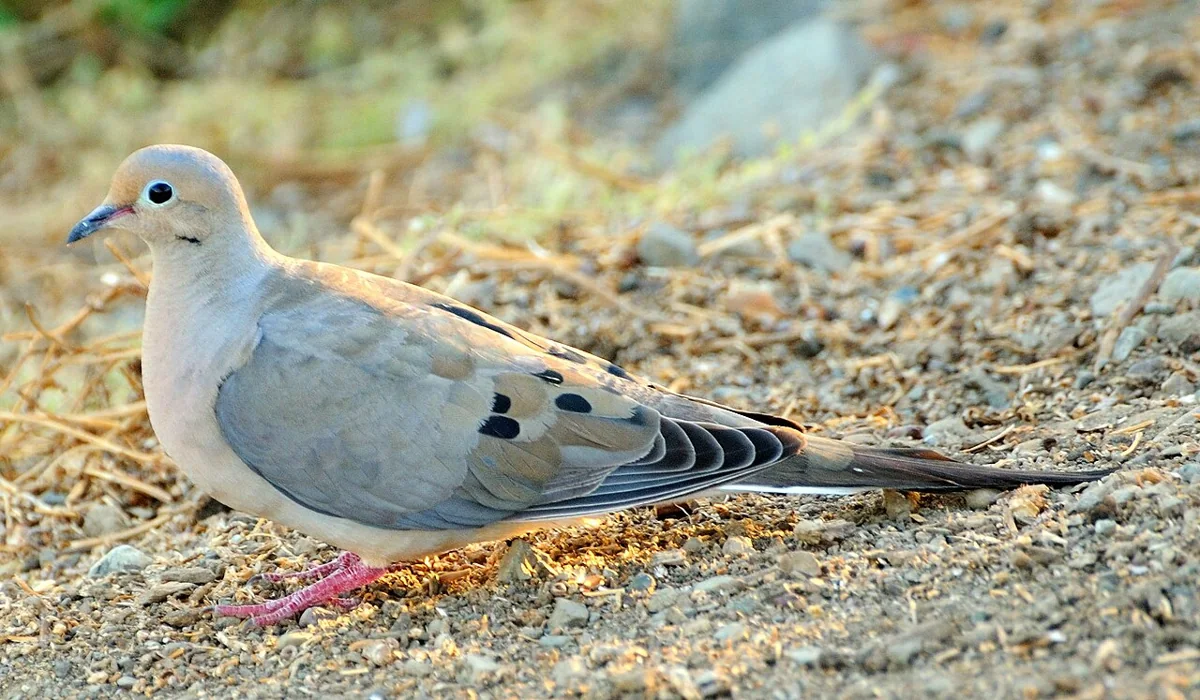
Two cardinals face one another in low branches. A dove bows beside another dove on a lawn. Ducks repeat quick movements at the edge of a park pond. Courtship can unfold in ordinary places, and some of its clearest features are visible from a path or window. The challenge is to recognize a possible display without turning a brief interaction into a complete account of the birds’ breeding lives.
Begin with the sequence. Note what each bird does, how the other responds and whether the action repeats. Then consult a species account for documented displays. The same broad movement can occur in different contexts, and some activity that looks like courtship to a person can involve aggression, feeding or a transition between behaviors.
Use the species and season together
Courtship timing varies widely. Some birds begin well before a visitor associates the weather with spring. Mallards can form pairs in fall and winter, and other species have their own schedules. A calendar helps you know what to investigate, but a single month does not identify the function of a movement or prove that a pair has a nest nearby.
Keep the location in mind as well. A behavior account from another region may describe a different seasonal schedule. Read the section for the relevant species and population when available. If the bird itself is uncertain, retain that uncertainty while describing the interaction. Correctly recognizing a movement cannot repair an unsupported species identification.
Look for a repeated exchange
Some displays involve posture, movement and response rather than a spectacular performance. A bird may raise its head, bow, spread feathers or move in a repeated pattern near another individual. Watch both participants where possible. The response can clarify whether you are seeing a coordinated exchange, a one-sided approach or a movement that happened independently.
Keep your language descriptive. “The bird bowed twice while facing the other individual” records an action. “The pair agreed to mate” assigns a conclusion that the brief view may not establish. A sequence of photographs can preserve the exchange if taken from your existing position. Avoid asking the birds to tolerate an approach for a clearer emotional story.
Food transfer has several possible contexts
Courtship feeding occurs in familiar species, including Northern Cardinals. One bird may offer food to another adult, making the interaction easy to notice. Food transfer also occurs between parents and young. Observe the recipient and its behavior carefully before deciding which process you saw. Body size alone can be misleading because recently fledged young may already resemble adults in size.
If the recipient remains hidden, write that one bird carried food toward another without naming the relationship. A fluttering posture can accompany begging, but it does not establish age by itself across every species. Use the species’ documented behavior and visible plumage together. If the scene takes place close to dense nesting cover, remain farther away and let the details stay unresolved.
Sound can be part of the display
Singing often has a role in territory and mate attraction. Some birds combine vocalizations with movements, while others make mechanical sounds. The presence of two birds near a singer does not necessarily identify their relationship. Watch the context and connect the sound with the individual producing it when you can. A neighboring bird can otherwise supply a misleading soundtrack.
Keep reference recordings for study away from the birds. Playback can change an interaction by provoking a territorial response or drawing an individual away. A natural display gives you a clearer basis for describing what was happening before you arrived. If you use a recording device, capture the existing sequence quietly without moving closer or repeatedly repositioning around the birds.
Watch park ducks from an open viewpoint
Mallard displays can include head movements, body lifting and brief combinations of calls and splashes. Several birds may gather, and a display can last only a moment. Choose a viewpoint that shows the group without placing you between birds and water. A wide view can preserve which individual acted and which one responded, information a tight portrait might lose.
Do not label every splash or chase as a courtship display. Bathing, aggression and ordinary movement also produce conspicuous water activity. Follow the sequence before and after the event and compare it with a reliable description. When the interpretation remains unclear, a factual movement note still captures something valuable about the encounter.
Give breeding activity room
Birds engaged in reproduction can be sensitive to disturbance. Keep an appropriate distance, stay on permitted routes and avoid blocking movement between cover and open space. If your approach interrupts the activity, increase the distance. You do not need to wait for a dramatic alarm response before deciding that a quieter, more distant view is better.
A display is not an invitation to locate the nest. Do not follow food-carrying adults into shrubs, inspect cavities or move vegetation. If you share a photograph, consider whether the surroundings reveal a sensitive location. A general description of the habitat and behavior can help readers understand the observation without directing visitors to a nest or concealed resting place.
When reviewing photographs, preserve their order. A single frame can conceal whether one bird approached, withdrew or simply turned away during an otherwise repeated exchange.
Keep the outcome distinct from the display
Seeing courtship does not establish successful nesting, eggs or surviving young. Even an apparent pair may separate or change behavior later. Write down the event you witnessed with its date and observation period. If you later observe another stage, add it as a new observation with its own evidence rather than treating it as a guaranteed continuation.
A hypothetical note might describe two doves close together, one circling and bowing while the other remained on the lawn, with the encounter ending when both flew away. That record leaves their later actions open. Repeated observations can teach you a species’ display vocabulary while keeping the boundary clear between a visible sequence and the larger life history you have yet to observe.
Keep exploring
Watch how a bird finds its food
Recognize gleaning, probing, ground feeding and aerial pursuit.
Drumming is more than a woodpecker finding food
Distinguish display drumming from feeding sounds and avoid false acoustic IDs.
Make sense of a mixed flock
Follow movement layers and separate species without chasing the flock.