
Behavior
Drumming is more than a woodpecker finding food
Distinguish display drumming from feeding sounds and avoid false acoustic IDs.
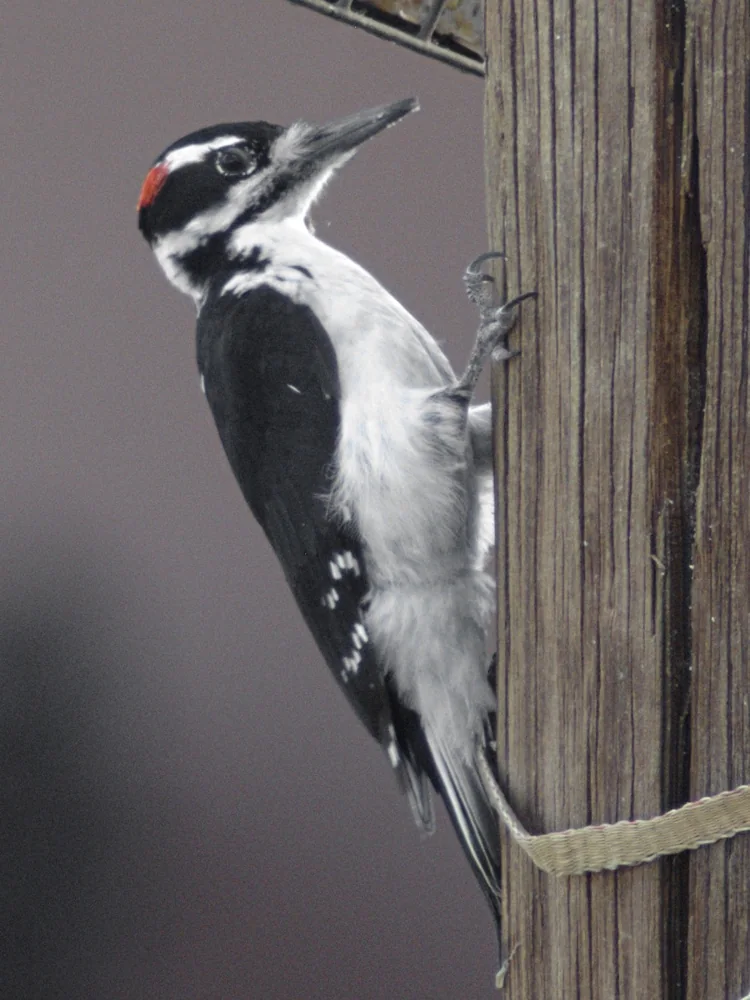
A rapid wooden roll can carry across a neighborhood before you see the bird producing it. The sound may come from a dead limb, a pole or a metal surface. A woodpecker can use such a surface to send a signal. Understanding that purpose changes what you listen for and prevents a common mistake of assuming every peck is a search for insects.
Start by listening to the shape of the sound rather than trying to guess the bird’s size from its volume. A loud surface can amplify a relatively small bird. The rhythm, duration and changes within a burst may contain more information than loudness alone. Even so, identifying the kind of activity and identifying the species are separate tasks.
Separate a drumroll from isolated pecks
Drumming consists of a rapid sequence of strikes that functions as communication. Territory advertisement, attracting a mate and contact between paired birds can all be involved. Feeding and cavity work generally use more deliberate strikes, with pauses for inspecting or removing material. A distant listener may hear only part of the sequence, so keep room for an unresolved tapping sound.
Other birds also peck at wood. Chickadees and nuthatches can tap while exploring food or working on a cavity. An occasional tap from hidden branches therefore does not identify a woodpecker. Listen for a repeated rapid roll, then watch for the source if a natural opening in the vegetation gives you a view. You can retain the sound observation without pursuing the bird.
The surface changes the sound
A resonant dead branch or metal fitting can broadcast a drum effectively. The chosen object can make the sound seem remarkably loud or bright. That does not mean the woodpecker is trying to eat the metal, nor does it establish damage. The same bird’s drumming on another surface may produce a different tone while retaining a recognizable pattern.
When recording the encounter, include the surface if it was visible. “Rapid rolls on a metal pole” gives useful context for a sharp ringing sound. If you could only hear it, leave the material unknown. A note about tone is still worthwhile, but avoid turning the tone into a firm statement about body size or bill strength.
Listen to the beginning, middle and ending
Some drums sound fairly even throughout. Others accelerate, slow, fade or break into spaced knocks. Try to retain the sequence as a whole. You might describe a short even burst, a longer roll that trails away, or an opening roll followed by separate taps. Those descriptions create a starting point for later comparison with labeled recordings.
Do not demand a perfect written imitation. Human syllables can help memory, but two people may represent the same drum differently. If you can make a recording without approaching, preserve the original file and the date. Include several bursts when available, because a single interrupted roll may give an incomplete impression of the bird’s usual pattern.
Compare species with several recordings
Downy and Hairy Woodpeckers illustrate how tempo can help. Hairy commonly produces a faster roll that can seem to merge into a buzz, while Downy typically sounds slower and shorter. Sapsuckers can have more irregular sequences with spaced knocks after an initial roll. These are useful listening comparisons, and their value increases when you study several examples of each local species.
Choose recordings that are clearly labeled as drumming. A species page may also include calls, feeding taps and other sounds. Compare similar sound types at a comfortable volume. Loud playback in your room can disguise the differences you are trying to learn, while playback near wild birds can disturb them. Study reference recordings away from the birds you intend to observe.
Connect the sound with a visible bird
A direct observation supplies a valuable association. If the bird remains relaxed, watch it begin a roll and confirm that its movement matches the sound. Notice the bill, back pattern and tail from your existing position. A small black-and-white woodpecker may still need a careful visual comparison, particularly when Downy and Hairy are both realistic local possibilities.
Keep other nearby sounds separate. One woodpecker can call while another drums, and neighborhood machinery may add a rhythmic noise of its own. Avoid combining the loudest call with the most visible bird merely because they occur together. A recording and a concise note can preserve the uncertainty until you have a better basis for connecting them.
Consider season without imposing a deadline
Drumming is conspicuous in the period when woodpeckers advertise territories and form or maintain pairs. The timing varies with species and location, and a calendar is a guide to expectation. A late-winter drum can be part of ordinary seasonal behavior even when trees are bare and the weather feels far from spring. It does not prove that eggs or young are present.
Likewise, hearing less drumming later does not establish that the birds have disappeared. They can be present while engaged in quieter activities or using another part of their area. When comparing visits, record what you heard during a defined period. A lack of detected drums says something about that session, while the birds’ occupancy requires a broader set of observations.
When several bursts come from one direction, note whether the tempo stays similar across them. A clipped recording may omit the ending that distinguishes an otherwise familiar pattern.
Choose a useful next step
If the activity is clear but the species remains uncertain, write “woodpecker drumming” and describe the pattern. If the sound consists of scattered taps, use a broader description. Your next listening session can focus on the transition within each burst or the connection to a visible bird. You do not need to resolve every sound during the first encounter.
For drumming near a home, identify the activity before looking for an appropriate property-management resource. Food searching, cavity excavation and signaling can require different explanations. This guide concerns observation and sound, and local wildlife advice can address a specific building concern. A careful account of the surface, timing and behavior will make that conversation more precise.