
Behavior
Make sense of a mixed flock
Follow movement layers and separate species without chasing the flock.
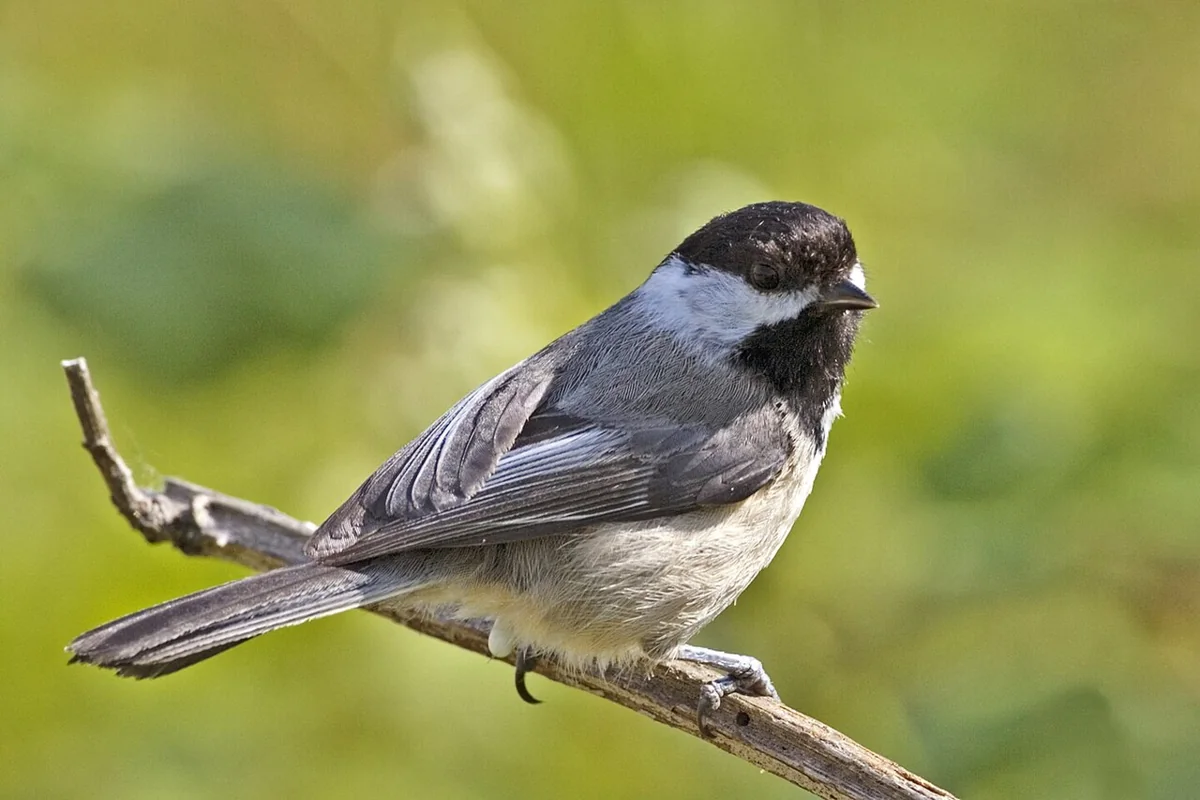
A quiet stretch of park can suddenly fill with small movements. Chickadees appear on twigs, a nuthatch works a trunk, and another bird slips through leaves above them. Then the group moves on and the path becomes quiet again. You may have encountered a mixed-species foraging flock, a loose association whose members feed and travel near one another.
The flock offers a concentrated viewing opportunity, but its pace can make identification feel rushed. A useful approach begins with staying still and dividing the vegetation into layers. You can learn more by following a few clear individuals than by chasing every movement. The task is to understand the association while preserving accurate observations of the birds within it.
Recognize a shared movement pattern
Several species feeding in the same tree are not automatically traveling as a flock. Watch whether the birds move through the area in a broadly coordinated way. They may advance along an edge, pause together in a productive patch, then continue. Some individuals can join for part of the route and stay behind as the others move onward.
These associations are often noticeable outside the breeding season, including fall and winter in many temperate North American settings. Local combinations vary. Chickadees, nuthatches, woodpeckers, kinglets and other small birds can participate, but no fixed membership list applies to every park. Use familiar species as an entry point into the group, then examine the less familiar movements.
Let sound help you find the activity
Contact calls can reveal a flock before the birds become visible. Pause when you hear several small calls moving through the vegetation. Listen for the general direction and watch for a twig or leaf shifting against a stable background. A single call may give you a location without being distinctive enough for a species identification.
Keep the sound source tied to what you can actually observe. A bird calling above you may differ from the one you see lower in the shrubs. If the group is active, several sounds can overlap. Choose one clear sequence and try to connect it with a visible individual rather than assigning all the calls to the most recognizable species in front of you.
Scan one vegetation layer at a time
Start at the level where you first found a bird. Follow it through a few movements, then deliberately check the trunk, lower foliage and upper branches. Birds can use different feeding surfaces within the same patch. A woodpecker may work bark while a foliage-searching bird examines leaves. Chickadees can move through several levels, so a change of height does not necessarily mean another individual.
Choose a fixed landmark such as a forked trunk to organize the scan. It helps you notice where a bird reappears and prevents constant sweeping that loses every subject. If you use binoculars, lower them periodically to recover the broader scene. A narrow view can make a flock seem to vanish when it has only shifted a few branches sideways.
Watch what each species contributes
Mixed flocks can provide advantages through shared detection of threats and opportunities to locate food. Several attentive birds can notice danger more quickly than one, and movement by one bird can expose food for another. These explanations describe potential benefits of association. They do not mean that every individual has the same role or receives the same benefit at every moment.
Observation becomes more specific when you compare foraging actions. Note a bird gleaning from a leaf, another probing bark, and another making a short flight away from a perch. The differences can help you keep individuals in mind and reveal why several species can use the same small area. Record the action before guessing the exact food item.
Resist the pressure to count every movement
A lively flock can contain more birds than you see at one time. It can also contain fewer birds than the number of appearances you notice. Individuals loop around trunks, cross behind leaves and return to the same branch. Avoid adding every reappearance as another bird. For a casual private note, a minimum number seen together may be a sensible starting point.
Keep identification uncertainty separate from count uncertainty. You might know that three chickadees were visible together while remaining unsure about a fast-moving bird high in the canopy. Describe that bird as an unresolved observation. The flock’s known members cannot supply its identity. A rare or unexpected species deserves its own evidence rather than credibility borrowed from the company it keeps.
Allow the flock to pass
Stay on permitted routes and avoid pressing into vegetation to keep pace. Birds may move past your viewpoint naturally, giving you better angles than an approach would provide. If the flock continues away, watch the direction and let the encounter end. You can choose another accessible point on the path without surrounding the birds or repeatedly driving them ahead.
A quiet interval afterward can be useful. A bird that remained behind may become easier to study, and the next calls may reveal whether the group has curved through the area. Do not assume a return involves new birds. Keep the earlier movement in mind when recording totals, especially on a short loop where you could encounter the same association again.
Turn the encounter into a local question
Summarize the date, habitat, approximate route of movement and species you identified confidently. Add a separate line for uncertain birds and the features you missed. A hypothetical note could describe a group moving along a wooded edge, with chickadees in fine branches and a nuthatch on larger trunks. That comparison preserves the organization of the encounter as well as its species list.
On later visits, ask whether the same kinds of association occur in another season or vegetation type. Keep observation effort in mind before concluding that a flock has become more common. One concentrated encounter can dominate your memory of a walk. Repeated, bounded notes will show how a familiar place changes while leaving room for birds that remained beyond your view.
Keep exploring
Watch how a bird finds its food
Recognize gleaning, probing, ground feeding and aerial pursuit.
Drumming is more than a woodpecker finding food
Distinguish display drumming from feeding sounds and avoid false acoustic IDs.
Why small birds mob a larger bird
Interpret alarm gatherings without approaching or exposing a predator.